



Hartbeespoort (Harties)
North West, South Africa South Africa
1. Overview & Geography
- Location: Hartbeespoort is in the North West Province of South Africa. The area centers around the Hartbeespoort Dam, nestled in a valley just to the south of the Magaliesberg mountain range.
- Proximity: It’s quite accessible — about 35 km northwest of Johannesburg and around 20 km west of Pretoria.
- Composition: The “town” of Hartbeespoort isn’t a single settlement but rather several smaller villages/areas around the dam, including Meerhof, Ifafi, Melodie, Schoemansville, and Kosmos.
2. History & Name Origins
- Name meaning: “Hartbeespoort” comes from Afrikaans: “poort” means “pass” or “gorge,” and “hartbeest” refers to a type of antelope. So it literally means “the pass of the hartebeest. The area was apparently once a popular hunting spot for hartebeest.
- Dam construction: The Hartbeespoort Dam was constructed starting in 1921 and officially opened in 1923.
- Architecture: One striking feature of the dam is its Roman Triumphal Arch–style wall, inspired by the Parisian Arc de Triomphe.
- Purpose: Originally, its primary purpose was for irrigation, but it also supports domestic and industrial water use.
3. Environment & Water Issues
- Hydrology: The dam impounds primarily the Crocodile River, with contribution from the Magalies River. i
- Eutrophication: Since around the early 1970s, the dam has suffered from hypereutrophication, meaning very high nutrient loads (phosphates, nitrates), leading to algal blooms and degraded water quality.
- Invasive species: There is a problem with Salvinia molesta, a floating aquatic fern, which forms dense mats on the dam surface.
- Management: The Department of Water and Sanitation has a resource-management plan for the dam, indicating its importance for both recreation and environmental stewardship.
4. Tourism & Attractions
Harties is a very popular weekend/holiday getaway, especially for people from Gauteng (Johannesburg/Pretoria). Here are some key attractions and activities:
4.1 Water-based Activities
- Boating, cruises, jetskiing, water-skiing, windsurfing, parasailing.
- Yacht club: The Transvaal Yacht Club has been active since the dam’s early days.
- Rescue: There’s an inland station of the National Sea Rescue Institute on the dam.
4.2 Adventure & Aerial Activities
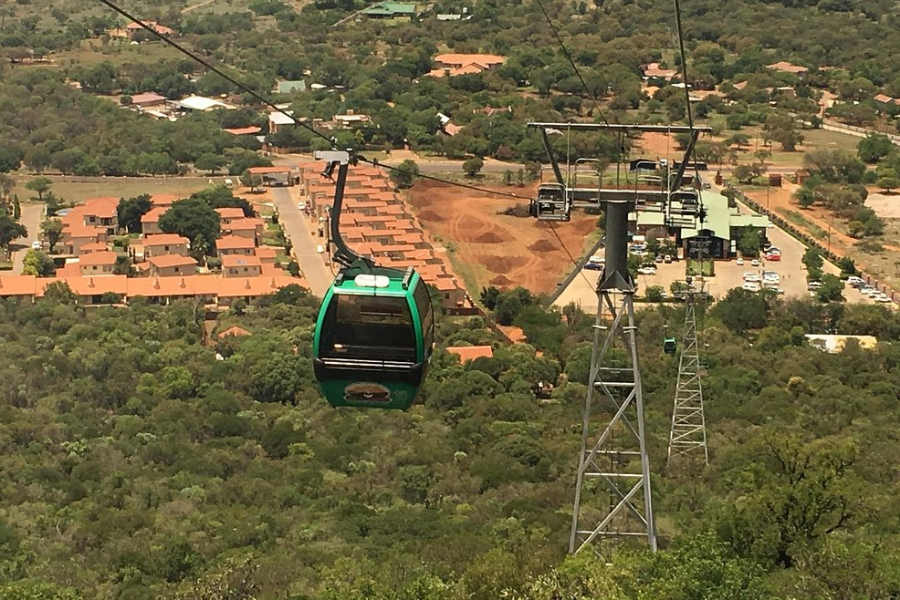
- Hartbeespoort Aerial Cableway: Ride up for panoramic views of the Magaliesberg and the dam.
- Paragliding, hang-gliding, hot air ballooning: For adrenaline seekers.
- Ziplining: There are canopy tours and zip-line adventures.
- Horseback safaris: Ride through scenic parts of the Magaliesberg.
4.3 Wildlife & Animal Sanctuaries
- Ann van Dyk Cheetah Centre: Nearby, for cheetah conservation and wildlife experiences.
- Elephant Sanctuary: Allows visitors to get close to elephants.
- Bushbabies Monkey Sanctuary: Another of the animal-oriented attractions.
- Snake Park & Aquarium: At the dam itself — reptile and aquatic life displays.
4.4 Cultural, Markets & Relaxation
- Chameleon Village: Craft markets, shops, live entertainment, curio stores.
- Welwitchia / craft markets: Part of a broader arts-and-crafts tourism route.
- Restaurants: A diverse food scene — cafés, fine dining, local bistros, even wine tasting and distilleries.
- Spas: Day spas set in nature; good for relaxing.
4.5 Outdoor & Heritage Activities
- Hiking trails through mountains and valleys around the dam.
- Heritage route: Hartbeespoort is part of a heritage route linking to sites like the Cradle of Humankind.
- Annual ultra marathon: The Om Die Dam 50 km race is held in the area.
5. Accommodation & Local Lifestyle
- There are guesthouses, lodges, and estates around Harties, catering both to weekend visitors and permanent residents.
- The local economy is quite tourism-oriented: craft markets, farm stalls, boutique shops, and artisan outlets are common.
- The area has a mix of relaxed rural charm (especially in quieter estates) and more lively tourist activity zones.
6. Challenges & Environmental Concerns
- Water quality: As mentioned, eutrophication is a major issue, driven largely by nutrient loads from surrounding urban and agricultural areas.
- Invasive species: The Salvinia molesta infestation is a serious ecological concern.
- Regulation gaps: According to municipal sources, there’s a lack of formal regulation around adventure tourism (e.g., no formal rental facilities, all done “individually”).
- Sustainability: Given its popularity as a tourism “playground for Gauteng,” balancing conservation with recreation is an ongoing challenge.
7. Governance & Development
- The Department of Water and Sanitation (DWS) owns and operates the dam.
- The Madibeng Local Municipality encompasses Hartbeespoort and recognizes it as a high-tourism zone, highlighting its importance for regional development.
- Tourism is being promoted actively: for instance, North West Province launched “Tourism Month” events centered at the dam to spotlight the area’s cultural and natural assets.
8. Tips for Visitors
- Best time to go: Weekends are popular, especially for day-trippers from Johannesburg/Pretoria, so early planning helps.
- Activities: Combine a cableway ride, a boat cruise, and a visit to one of the wildlife sanctuaries for a full experience.
- Health & safety: Be aware of the water quality when planning water-based activities.
- Transport: It’s easiest to drive in; public transport is limited, so rent a car or arrange a tour.
- Accommodation: Book in advance if staying over weekends. There are both luxury and more modest options.
9. Why Hartbeespoort (“Harties”) Matters
- It’s a cultural & recreational hub: Harties is more than just a dam — it’s a convergence of nature, adventure, conservation, and local culture.
- Strategic tourism node: For the North West province, Hartbeespoort plays a critical role in attracting weekend visitors and supporting local economies. Environmental importance: Managing the dam’s health is key not only for tourism, but for water supply and ecological balance in the region.
- Heritage: The area sits on heritage routes and has architectural and historical significance (e.g., the dam wall’s style).


